The Children of the Sun
According to legend, Manco Cápac and Mama Ocllo emerged from Lake Titicaca under the command of the Sun God to fulfill their purpose: to guide and direct the peoples who were living in a state of barbarism.
These enigmatic figures carried a golden rod, which they would drive into the ground wherever they stopped. At one specific point, the staff sank completely into the earth; the ideal location had been found to begin the development of one of the world's most important cultures. Thus began the Empire of Tawantinsuyo (*Tawa* meaning four, and *Suyo* meaning region).
It is worth noting that Manco Cápac and Mama Ocllo had been prepared since childhood by celestial messengers from beyond Earth. Consequently, their mission to lay the foundations of an advanced civilization in South America was part of a project aimed at activating the legacy of the White Brotherhood and ensuring the future protection of the Solar Disc. The Incas were entrusted with this supreme mission: to protect the sacred tool that unites the ages.
The connection between all of this and the subterranean world is significant.
For instance, there is another legend regarding the origin of the Incas which tells of four brothers and their wives emerging from a cave to found the Empire of the Sun. Once again, the central figure is Manco Cápac, who ultimately fulfills his mission. In any case, both accounts present us with an origin defined by unique characteristics that would give life to this wise civilization.
The Inca Empire was a vast realm that, broadly speaking, extended from southern Colombia to central Chile, and from the Andes to the coast. The site chosen to lay the foundations of this new civilization was Qosqo (Cusco)—a magnetic focal point that possessed the ideal conditions to serve as the setting for this highly evolved culture.
The early days of what might be termed the "second Inca dynasty" (with the first corresponding to Tiahuanaco) were marked by great happiness, peace, and abundance. The Incas developed an economy based on the intensive construction of mountain terraces, mastering the arts of hydraulics and water irrigation.
Their civilization was organized around both urban centers and networks of roads. They maintained an efficient administration and demonstrated great skill in the arts and metalworking; their functional, understated architecture contrasted with unique textile craftsmanship and exquisite finishing. Extraordinary pottery skills further complemented the various forms of artistic expression they cultivated.
In a brief yet insightful overview of Inca religion, one could say that it was initially "simple." They worshipped only Viracocha—whom they regarded as the creator god—along with a few others, such as Inti, Mama Quilla, Pacha Mama, and Pachacamac.
Viracocha—also known as Illa Viracocha Pachayachachi—was considered the primordial radiance or "The Lord, Master of the World." He was originally a deity of the ancient Tiahuanaco people, who hailed from the Lake Titicaca region. He created the heavens and the earth, as well as the first generation of giants who inhabited the area...
Worship of the creator god involved abstract and intellectual concepts and was reserved for the nobility. Like other deities, Viracocha was a nomadic god (!) and had a winged companion: the Inti Bird—a sort of magical bird possessing great knowledge of wondrous things and even future events.
As early as 1977, archaeologist María Scholten de d’Ebneth shook the foundations of academia when she first published her research on "The Route of Viracocha." In that study, Scholten demonstrated that various archaeological sites across Bolivia, Peru, and Ecuador—locations identified in legend as "transit zones" for the teacher-god Tecsi Viracocha—were masterfully aligned using geometry, thereby highlighting the genuine scientific knowledge possessed by ancient Andean cultures.
This is particularly intriguing, as it immediately raises the question: Who, then, was Viracocha really? One of the celestial instructors. (Extraterrestrial Guides)
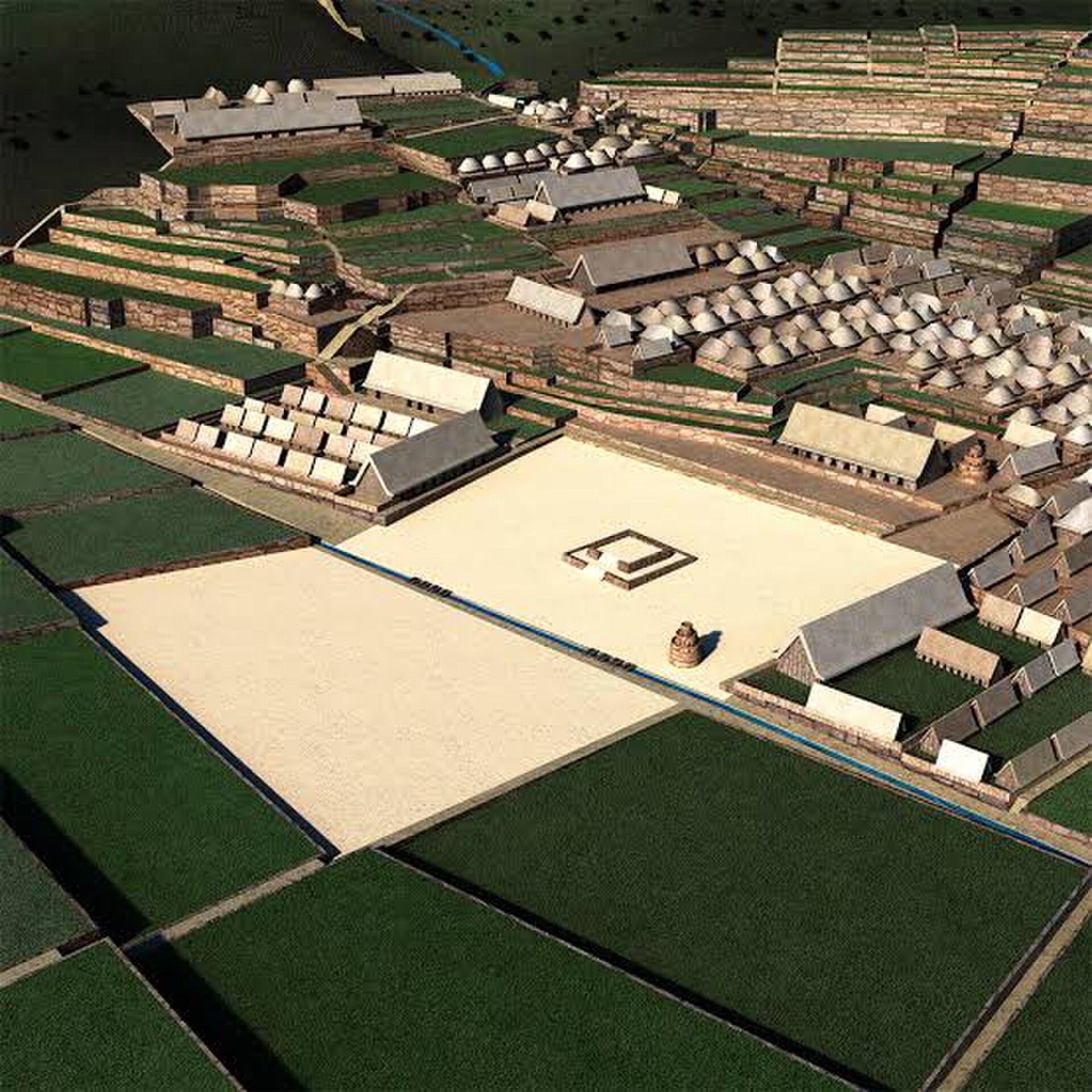
https://en.wikipedia.org/wiki/History_of_the_Incas
From Manco Cápac to Atahualpa: From Light to Darkness
It was not long before Manco Cápac revealed the existence of the Solar Disc; before his death, he entrusted his successor, Sinchi Roca, with the secret entrance to the underground chamber located on the shores of Lake Titicaca—anciently known as Mamacota or Puquinacoha (Place of Origin).
The Disc was discovered and immediately transported to the Koricancha in Cusco, the golden temple dedicated to the sun.
Regrettably, the Incas' warrior nature began to emerge. Led by Sinchi Roca—curiously, the name *Sinchi* means "warrior," "excessively strong," or "bitter"—they executed a plan to expand the empire beyond its known boundaries.
Thus began the early years of this "second Inca dynasty," a period that saw a transition from peaceful reigns—such as that of the statesman and accountant Lloque Yupanqui—to the powerful rule of the conqueror Cápac Yupanqui, who extended the kingdom's borders far beyond previously known lands.
Much of the time between the reigns of the seventh Inca, Yahuar Huaca, and the ninth, Pachacutec—who would also be remembered as the greatest builder, not only of grand and imposing temples but also of urban planning and strategic city defenses—was marked by external and internal wars.
However, the countdown to the end was already underway, beginning with the arrival of the eleventh Inca, Huayna Cápac. The Great White Brotherhood, in its retreat within the Madre de Dios jungle to the east of the Empire, was well aware of the events about to unfold.
Paititi, the secret city
Huayna Cápac, father of Huáscar and Atahualpa, ascended the throne in 1481 at the age of thirty. He was affable and deeply loved by his subjects; admired for his bravery and prudence, yet feared as a relentless conqueror. He fathered over a hundred sons and had some fifty wives.
He sired Atahualpa with the daughter of the principal lord of Quito, while Huáscar was born in Qosqo (Cusco) of his union with the *coya* Rahua Ocllo—his sister and second legitimate wife—after his senior *coya* had failed to produce an heir.
Huayna Cápac ruled for more than three decades, continuing the policy of territorial expansion and strengthening the state organization initiated by his father, Túpac Inca Yupanqui—himself a great conqueror and statesman.
The latter had sought to launch an ambitious military expedition into the jungle region of Madre de Dios with a force of over 40,000 warriors, aiming to extend the empire's borders into Antisuyo.
However, it is well-documented that fierce resistance from indigenous tribes, combined with the challenging terrain—raging rivers, dense and impenetrable jungles, sweltering heat, and a host of parasites and vermin—forced the decimated Inca forces to strike a pact with the "Gran Yaya," the lord and chieftain of the tribes in the Paititi region.
Legend holds that this agreement was commemorated by the construction of a city named Paiquinquin Qosqo—meaning "Twin City of Cusco"—on the Pantiacolla plateau. Serving as the final outpost for jungle penetration, it was linked to Paucartambo by a series of *tambos* (waystations) and *pucaras* (fortresses) along the route.
A square-shaped lagoon was constructed at the foot of the city to ensure a reliable water supply. This place, regarded by locals as a sanctuary, was situated beside a great waterfall and a mountain riddled with deep caverns. However, we must not mistake this Inca foray into the jungle for the actual founding of Paititi.
In reality, the true Paititi is an intraterrestrial city established by survivors of Atlantis long before the rise of the Inca Empire itself.
For instance, legends recount that very tall men—clad in white or ochre-colored garments—were seen emerging from the depths of the caves. Thus, the Inca expeditionary force had to seek authorization not only from the local indigenous people but also from the subterranean inhabitants, known as the "Primal Guardians."
These beings—the Paco Pacuris—were said to be survivors of a civilization that had once spanned the entire Amazon region, representing an intraterrestrial humanity...
The Twilight of Tawantinsuyo
He was the secret brother of Huascar and Atahualpa—who were fighting for leadership of the Empire—and was named Choque Auqui.
A handsome young man of medium height, intuitive and intelligent, he was destined to complete the Inca mission, which had been compromised by the misuse of power; having conquered excessively, they were now—by the law of cause and effect—fated to be conquered themselves.
Three emissaries arrived at the Empire from the Hierarchy’s main center—built underground in the jungles of Madre de Dios (in present-day Peru), a region Tupac Inca Yupanqui had previously attempted to conquer—to warn of the impending, fatal outcome.
The Inca Masters knew the envoys from the subterranean realm were right, as various signs they had observed pointed to the end of the Empire. Consequently, after the emissaries departed, the elder *quipumayocs* hid all the records of Andean culture they could gather; likewise, they moved the Solar Disc to a safe location. A disc made of pure gold—identical to the original—was placed on the wall of the Coricancha as a substitute to avoid arousing suspicion.
To this end, Prince Choque Auqui secretly summoned the *amautas* (masters) and proposed a mass escape to a safe haven—the place where the Paco Pacuris had taken the Gold Disc to protect it from falling into the hands of the conquerors.
To carry out this flight, Choque relied on the assistance of the townspeople, the priests, and the *mamacunas* near the Temple of the Sun.
From there, the envoys would enter the Coricancha under the cover of night to access the *Gran Chingana* (Quechua for "Labyrinth"), a subterranean, maze-like tunnel running beneath the city toward the fortress of Sacsayhuamán.
Then, they would continue through another nearby tunnel toward Paucartambo, and from there—finally emerging onto the surface and traversing rugged terrain—make their way to the jungles of Manú...
The Awakening of the Solar Disc
The flight of Choque Auqui and the safeguarding of the Solar Disc are said to have taken place in the year 1533.
The Disc, currently guarded by the Masters of the White Brotherhood of Paititi, is a kind of cosmic tool acting as an interdimensional "key"; it has the potential to lead the entire planet into the Real Time of the Universe when the reconnection of times—as previously discussed—occurs.
For this reason, the Masters state that the disc does not truly represent our Sun, but rather the Galactic Central Sun.
The Solar Disc is composed of twelve smaller discs—resembling metallic mirrors—which,
when interconnected and placed at strategic points, could establish a pathway connecting to the cosmic gateway leading back to the Real Time of the Universe.
Thus, a combination of various metals—specifically seven—was required. Yet, a mere
alloy of metals was not enough; their creation demanded the combined voices, minds, and hearts of the planet and of this alternative timeline.
These discs are currently guarded within the Inner Retreats of the White Brotherhood in locations such as the Gobi Desert, Egypt, Cambodia, England, Spain, Mount Shasta (USA), the Valley of the Seven Luminaries (Mexico), the White City (Honduras), the Dominican Republic, Sierra Nevada (Colombia), Lake Titicaca (Bolivia), and Arequita (Uruguay).
It is interesting to note that, for the Maya, the number 13 represented time itself, and that the magical priesthood consisted of a Master and twelve disciples—much like Jesus and his apostles.
Within this symbolism, the Paititi Disc represents Christ, and consequently, His Return as the Lord of Time. Nor is it a coincidence that, within Andean cosmogony, Prince Choque—the Inca King—is awaited; he is destined to return from Paititi to Cusco, the "navel of the world," to restore order and usher in a new era.
.
Translated from: The Children of the Sun
http://www.sixtopazwells.com/plan-cosmico/
Links
Incas
https://cosmicsong.org/index.php/history/incas
Extraterrestrial Guides
https://cosmicsong.org/index.php/guides
Solar Disk
https://cosmicsong.org/index.php/dictionary/solar-disk
Great White Brotherhood
https://cosmicsong.org/index.php/terminology/the-great-white-brotherhood-ghb
Paititi
https://cosmicsong.org/index.php/interior-retreats/paititi
Kybalion
https://cosmicsong.org/index.php/references/kybalion